
Philosophy
Beyond the Single Story
Healing begins when we move beyond the single story and make space for the full complexity of who we are.
The Bloom Philosophy
The ideas that guide my work were shaped not only by professional training, but also by lived experience.
Over time, I came to understand that people rarely struggle because of a single issue, and they rarely thrive because of a single intervention. Our wellbeing is shaped by relationships, identity, culture, purpose, opportunity, health, community, and the environments in which we live and work.
That understanding sits at the heart of Bloom.
It is why I look beyond diagnoses, labels, and isolated problems to consider the broader stories, systems, and experiences that shape our lives.
Beyond the Single Story
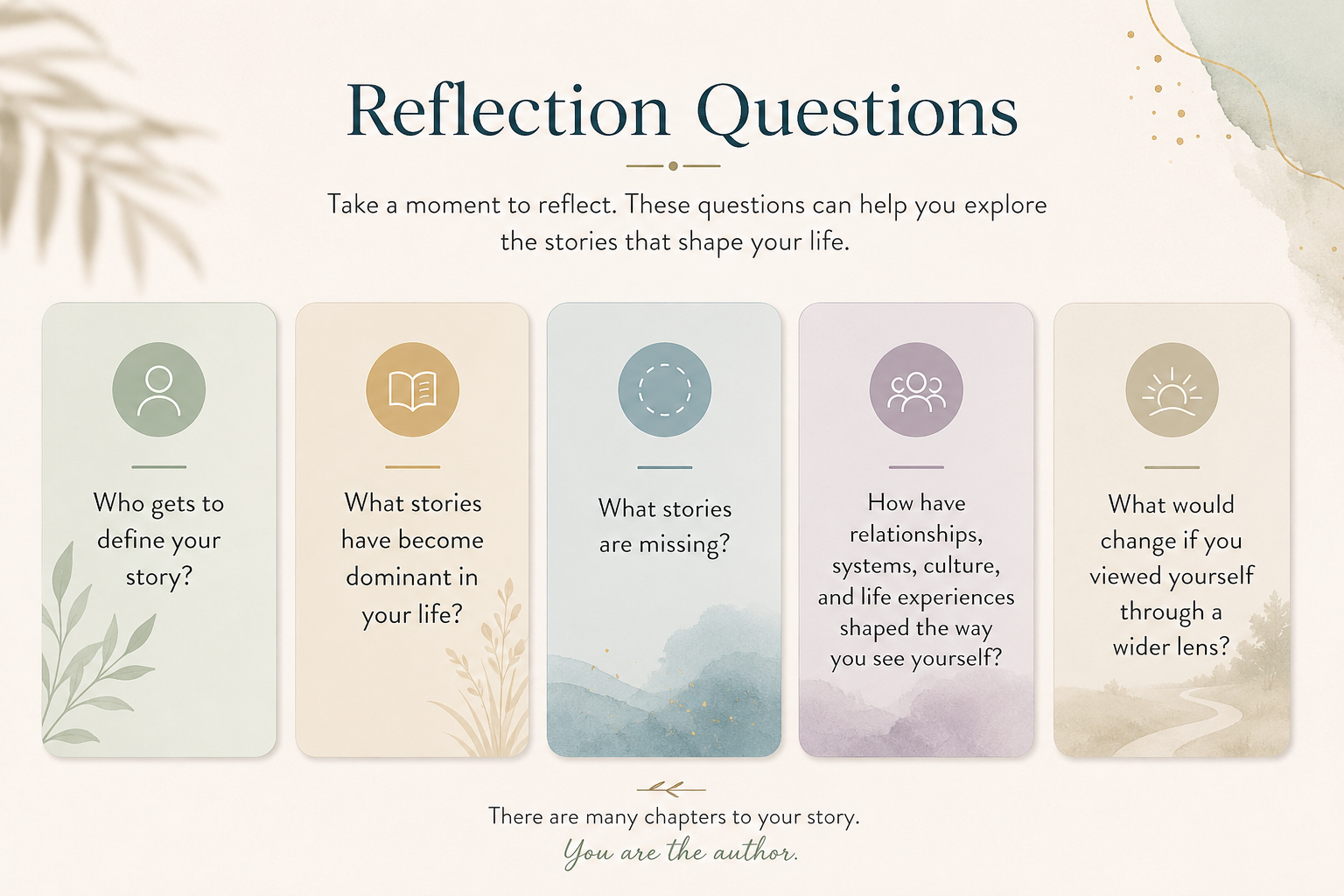
Everyone carries stories about who they are.
Some are inherited. Some are assigned by families, schools, workplaces, healthcare systems, and society. Others emerge from difficult experiences, loss, trauma, disappointment, transitions, or moments we wish had never happened.
Over time, those stories can become so dominant that they begin to eclipse everything else.
The problem is that no person can be fully understood through a single story.
You are more than the worst moment of your life.
You are more than a diagnosis, a label, a mistake, a setback, or a chapter that did not go as planned.
My work is grounded in the belief that people are complex, resilient, and capable of growth. Together, we explore the stories that have shaped your understanding of yourself, examine where those stories came from, and make space for the experiences, strengths, values, and possibilities that may have been overlooked.
What Healing Means
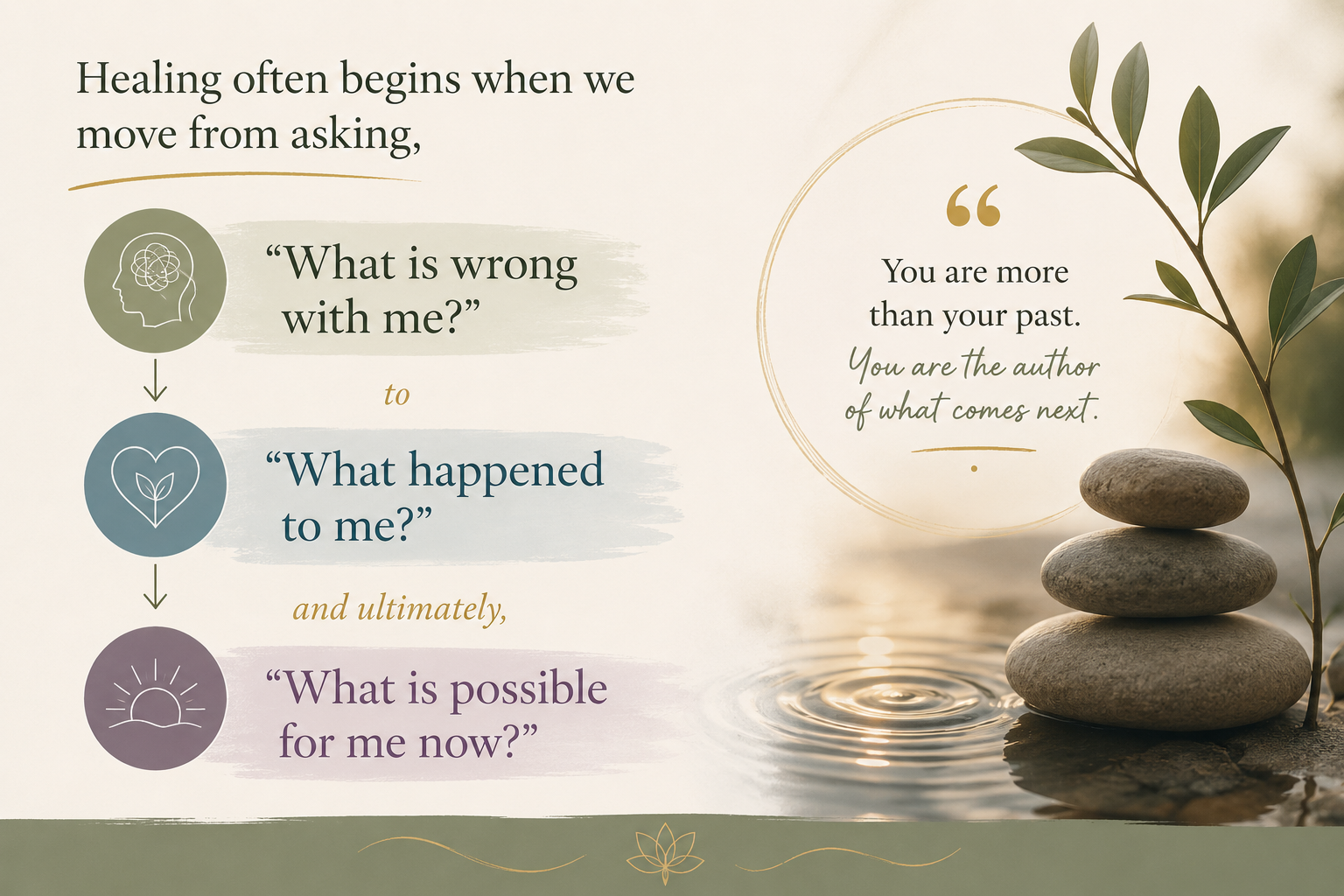
Healing is not a destination or a state of perfection.
Healing is an ongoing process of understanding ourselves more fully, responding to life's challenges with greater awareness, and creating opportunities for growth even in difficult circumstances.
Healing does not require forgetting, minimizing, or forcing positivity.
Instead, healing involves developing a different relationship with our experiences—one that allows us to acknowledge what has happened while continuing to move forward with intention, meaning, and hope.
I believe people are inherently resourceful and possess strengths that can be cultivated, even when those strengths may be difficult to recognize in the midst of stress, grief, trauma, or transition.
What Therapy Means to Me
Therapy is not about fixing people. People are not broken.
Therapy is a collaborative process that creates space for reflection, exploration, learning, growth, and change.
It is an opportunity to slow down and examine patterns, relationships, beliefs, behaviors, and experiences that may no longer serve you.
Whether you are navigating a crisis, processing grief, working toward personal goals, or reconnecting with overlooked parts of yourself, therapy can offer support, insight, accountability, and growth.
My role is not to tell you who you should be.
My role is to help you better understand who you are, identify the strengths and resources available to you, and support you in moving toward the life you want to create.

The Role of Wellbeing
Mental health does not exist in isolation.
Our wellbeing is influenced by our relationships, physical health, environments, communities, opportunities, values, culture, and sense of purpose.
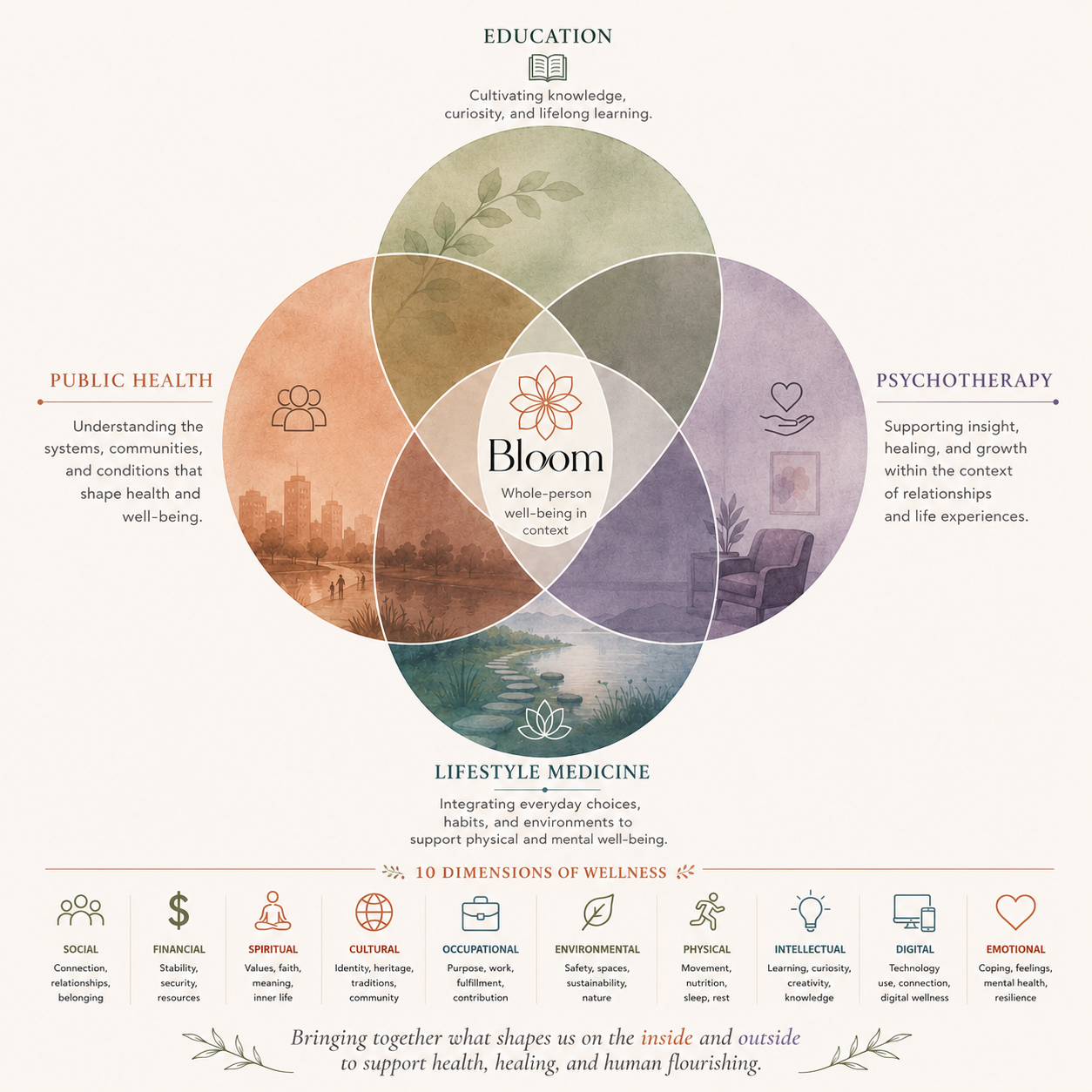
For this reason, my work is informed not only by psychotherapy, but also by education, public health, health promotion, and whole-person well-being.
I take a multidimensional view of wellness that recognizes the interconnected nature of emotional, physical, intellectual, social, occupational, environmental, financial, cultural, and spiritual well-being.
When one area is struggling, other areas are often affected.
When one area begins to strengthen, positive changes frequently ripple outward into other parts of life.
What Guides My Work
Whether I am working with an individual, facilitating a workshop, supporting a student, or consulting with an organization, I remain guided by the same belief:
People thrive when they are seen as whole human beings rather than as problems to be solved.
My goal is to help create the conditions that allow people not only to cope, but to flourish.