


HOLISTIC HEALTH PROMOTION
Creating Conditions for Sustainable Wellbeing
Support across people, communities, and systems.
Wellbeing is shaped by more than individual choices. It is influenced by the environments we live in, the relationships we build, the systems we navigate, and the resources available to us.
Drawing from public health, social work, psychotherapy, lifestyle medicine, culinary health, and more than two decades of experience in education, I support individuals, communities, and organizations in creating conditions that promote sustainable wellbeing.
Wellbeing Is More Than Health
Health is often discussed in terms of symptoms, diagnoses, or individual behaviors.
A holistic wellbeing approach recognizes that physical, emotional, social, cultural, financial, occupational, environmental, and spiritual factors interact continuously throughout our lives.
Rather than asking:
"What is wrong with this person?"
the question becomes:
"What conditions are shaping this person's wellbeing?"
These conditions may include relationships, culture, financial realities, educational opportunities, workplace demands, caregiving responsibilities, community resources, and broader systems that influence daily life.
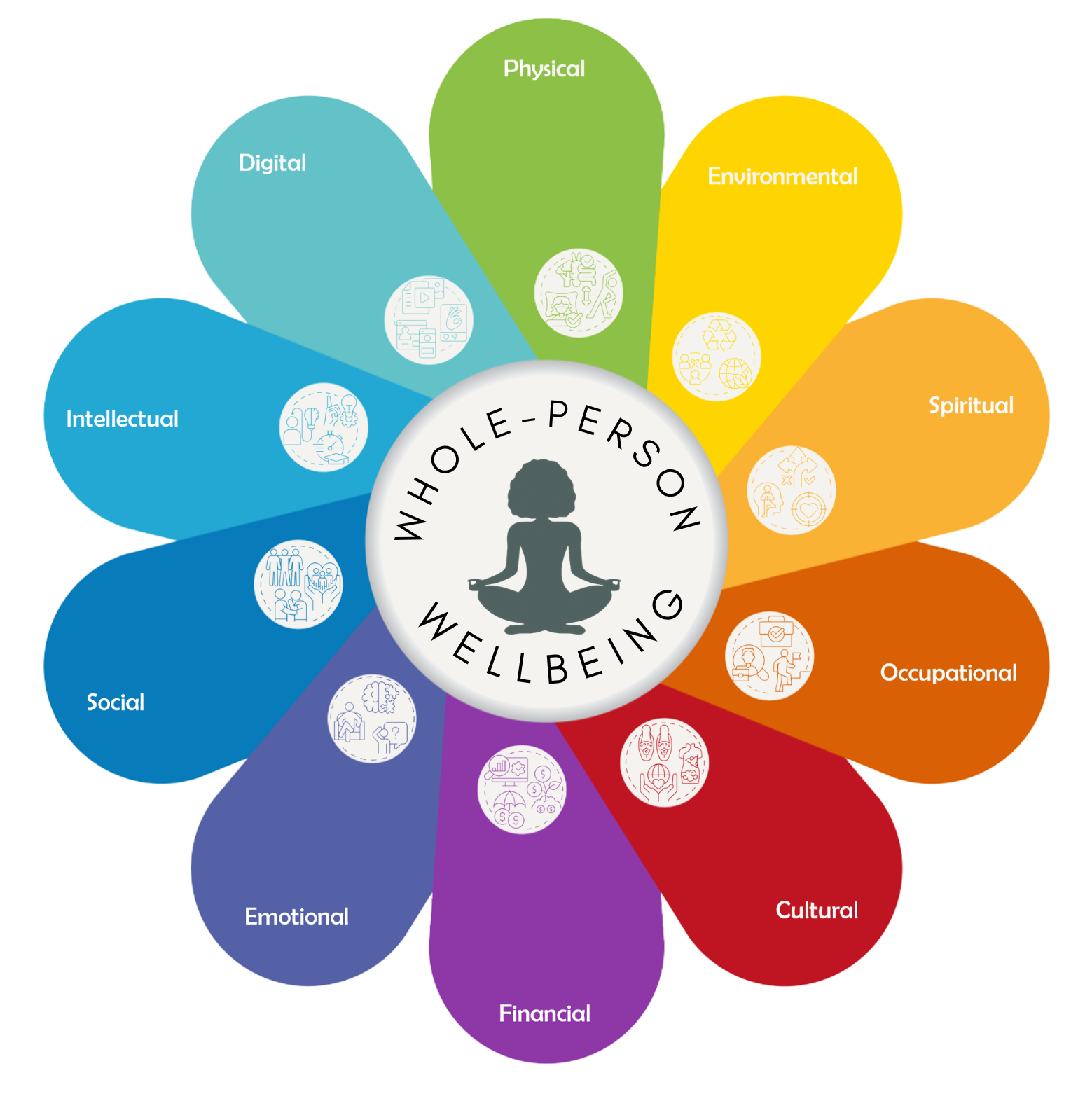
A Whole-Person View of Wellbeing
Wellbeing Happens at Multiple Levels
Wellbeing is influenced by factors operating at multiple levels.
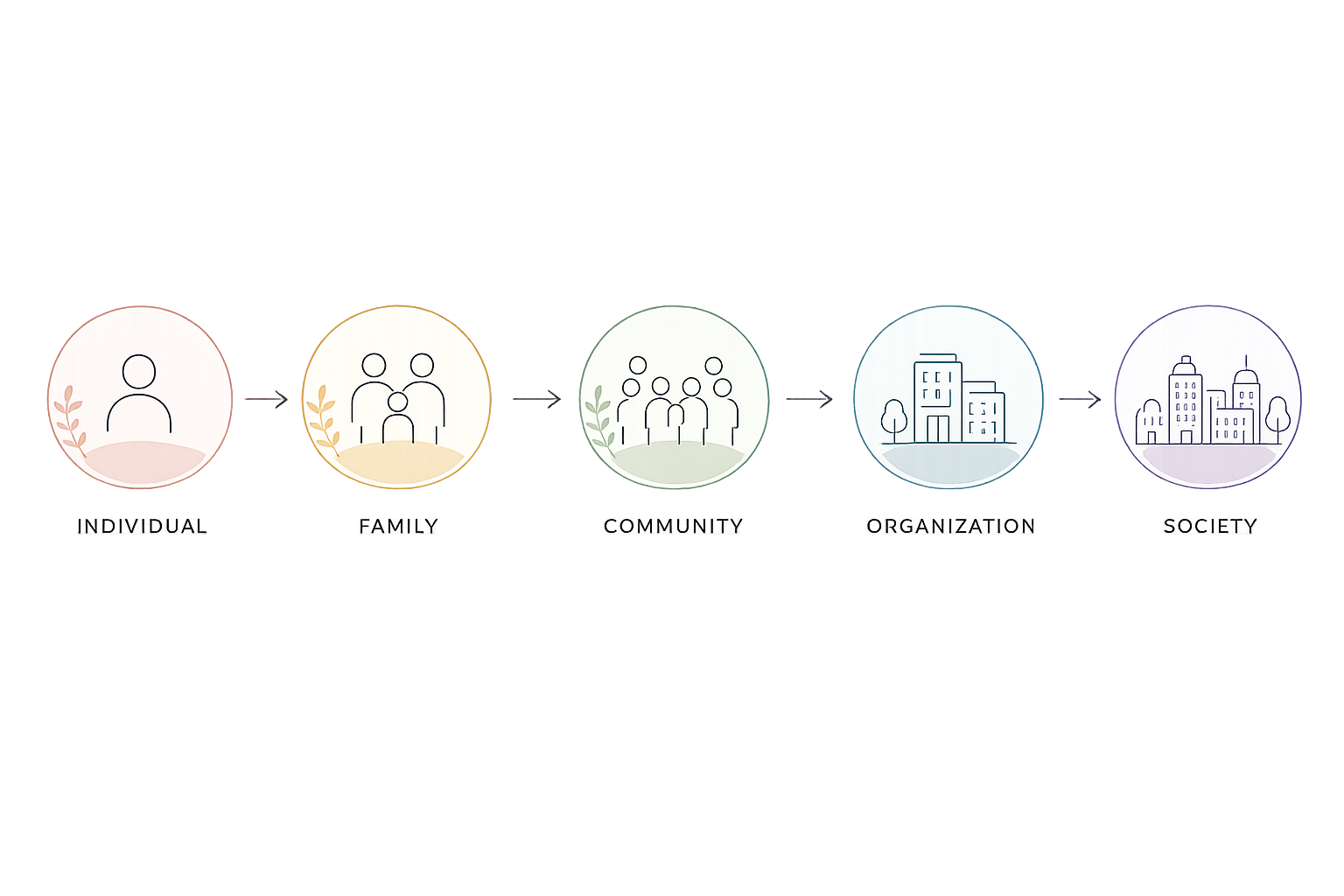
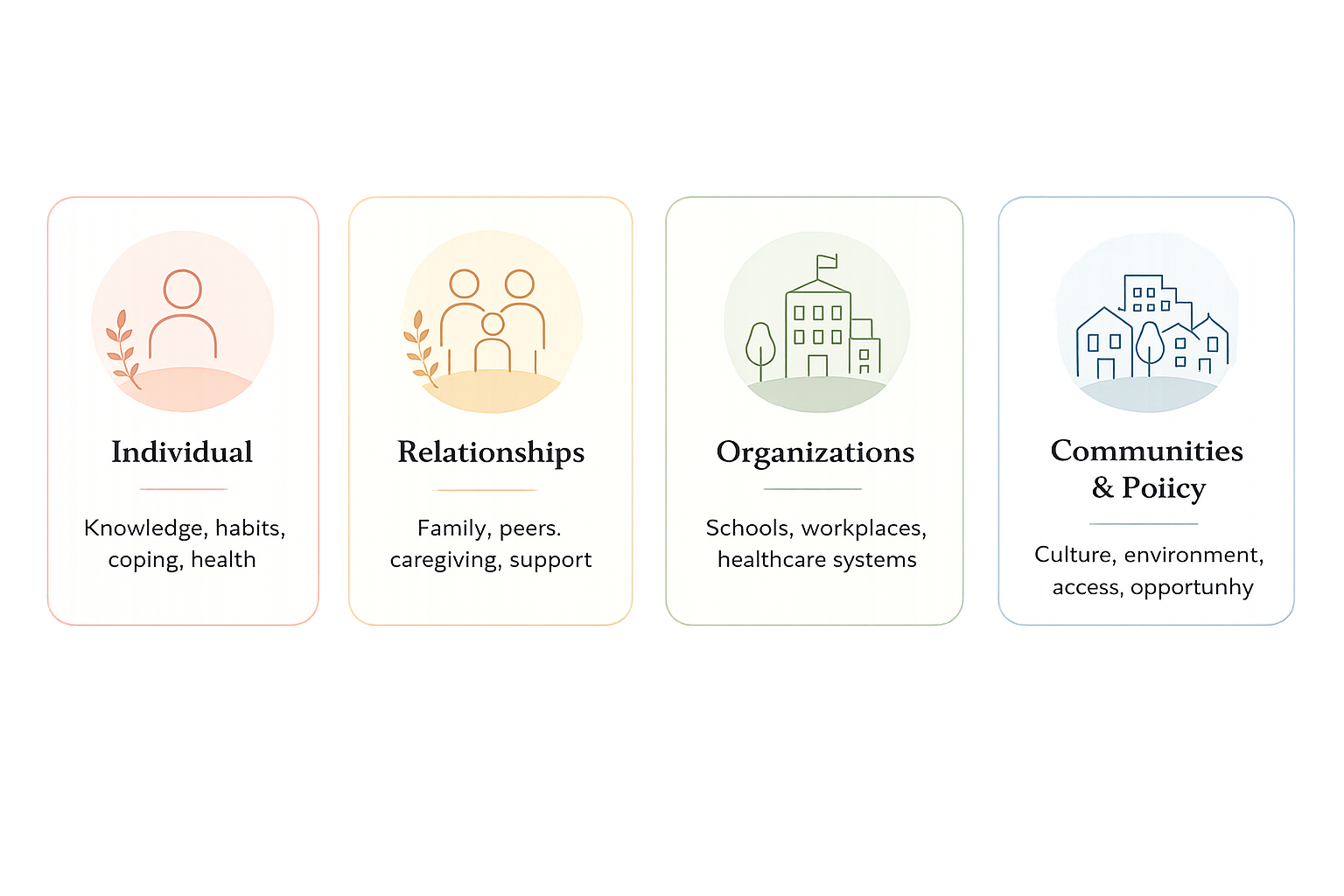
Challenges such as stress, burnout, chronic disease, isolation, food insecurity, and mental health concerns rarely emerge from a single cause.
They are influenced by factors operating across multiple levels:
Ways We Can Work Together
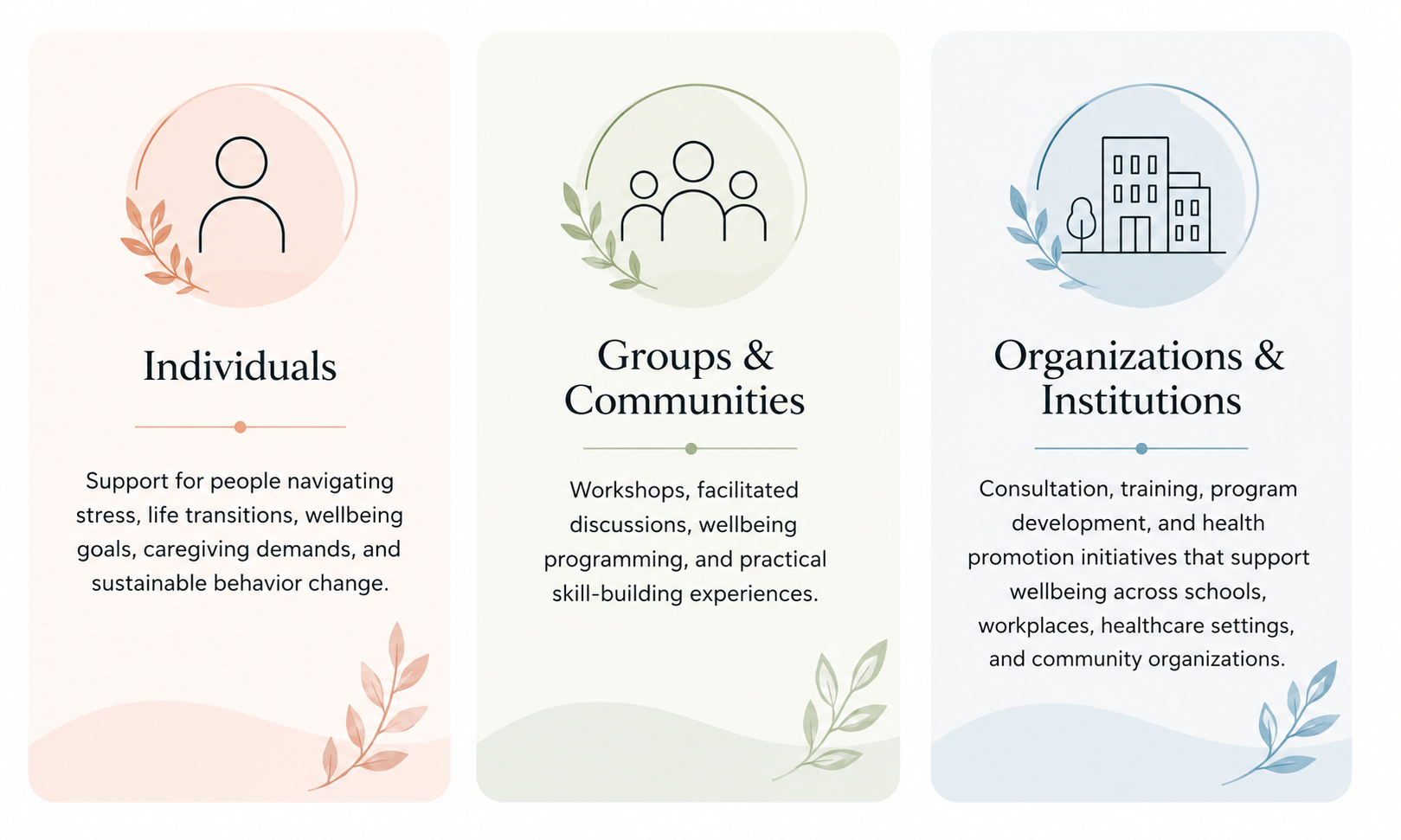

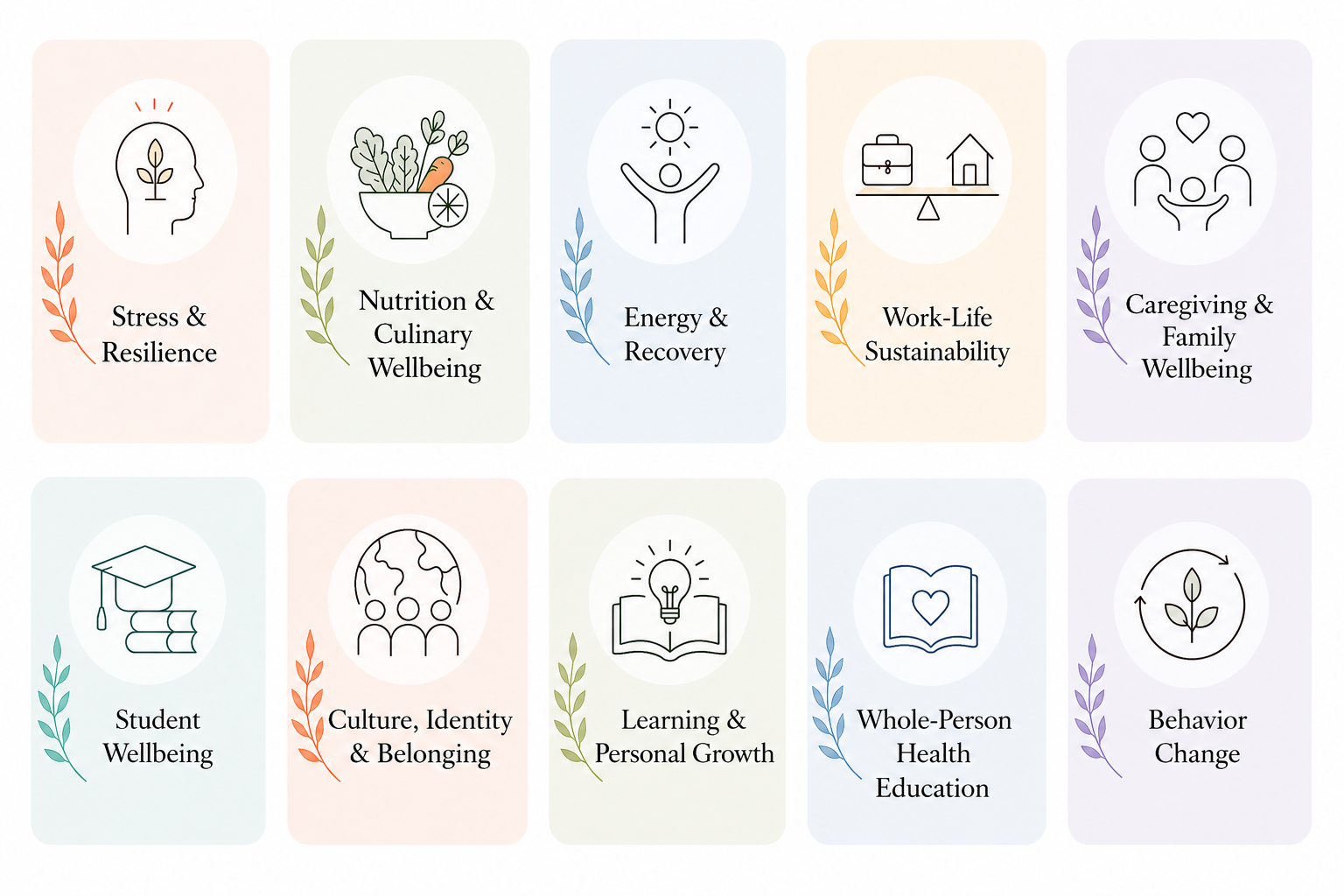
Areas of Focus
What Guides My Work

My interest in health promotion grew from a simple observation: people are often asked to change behaviors without adequate attention to the conditions shaping those behaviors.
Over time, both my professional work and lived experiences reinforced the importance of looking beyond individual choices to consider relationships, environments, systems, culture, opportunity, and access.
Sustainable wellbeing rarely comes from willpower alone. It emerges when people have the knowledge, support, resources, and conditions needed to thrive.
My work is informed by public health, lifestyle medicine, culinary health education, social work, psychotherapy, and more than two decades of experience in education.
Bloom was created from the belief that wellbeing cannot be fully understood through a single discipline. Lasting change often requires us to consider the person, the relationships, the environment, and the systems that shape everyday life.
Across these fields, a common question has emerged:
What helps people create meaningful change that lasts?
Together, these perspectives encourage a wider view of wellbeing—one that considers not only individual behavior, but also relationships, environments, systems, culture, and access.
This work is also shaped by an understanding of how people learn, adapt, and create lasting change, translating evidence-based knowledge into practical strategies that can be sustained in everyday life.